
Tender Mercy
Deborah
- posted on
- No Comment
The Police
With halting steps, Mike Keene approached the shadowy pile of blankets and old newspapers. He’d received the call to investigate a disturbance near the Hudson Park rest area. One hand poised over his sidearm and the other white knuckling his flashlight, he called out a warning, “I’m going to check to see if you’re okay or if you need help. I’m with the New Rochelle Police. Someone called dispatch about a loud argument. Do you understand?”
Officer Michael Keene was just off probation, but cop was in his DNA. His father, the second Michael Keene, had been forced into early retirement after 15 bitter years. His grandfather, the original Michael Keene, was a WWII veteran who accepted a job with the New Rochelle Police, since the lack of a high school diploma wasn’t a disadvantage in 1946.
As a boy, Mike found his grandfather’s medals in a wooden cigar box that still smelled of stale smoke – a whiff of buried treasure to his boyish imagination. “Hey Gramps, can I have these? The stars and purple heart are cool. What’s it for?” But the old man wouldn’t – or couldn’t – speak of his combat days. Walking away in disgust, he dismissed his grandson’s questions with a wave of his arthritic hand.
To Mike, it was a silent assent. He still had the box stuffed away with other mementos of his youth. Every now and then, dreaming of what might have been, he’d open the lid and handle the objects. A rusty boy scout pocketknife. A fishing lure that Dad had made for him on one of his good days. A faded polaroid of Lisa, the girl he had a crush on but never had the guts to approach. And the war medals he’d imagine were his.
Dad was a lot like Gramps, but much louder and meaner. He wasn’t interested in anything that didn’t involve malt liquor and Marlboros, especially after his mother, a non-smoker, died from lung cancer when he was still a kid. The little tenderness he’d known died with her.
From the age of ten, he was prey to his father’s version of child-rearing (Gramps was a silent spectator). Justice was swift and heavy-handed. A swat to the backside when he was small enough to be hoisted up by one arm. By the time he was too big for corporal punishment, he was cowed by angry glares and humiliating tirades. “You’re a good-for-nothin’ loser, and if you don’t wise up, you’re gonna wind-up in cuffs”, Dad would scream in many a drunken rage. Maybe his father didn’t ‘wind up in cuffs’, but his suspensions and reprimands were equally soul crushing. Seems Dad couldn’t live up to Mike the First and Foremost’s stellar reputation.
Mike the Second Stringer should have known better. Words have consequences and thoughtless actions speak volumes to an impressionable kid. Fearful of his prophecy, Mike the Third and Final (no son of his would be the fourth) joined the force to prove he could stay on the right side of the law. Like Dad and Gramps, it wasn’t a matter of choice as much as expediency.
The Victims
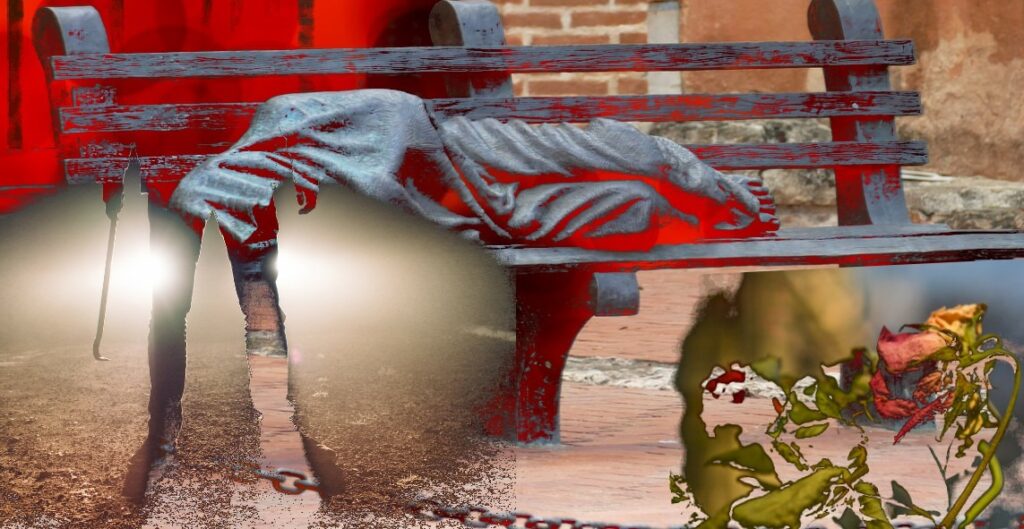
Regretting his career choice yet again, Mike inched his way towards the shadowy form. Anxiety, not confidence, fueled his actions. Taking a ragged breath, he pulled back a section of bloody newspaper. He barely recognized Deejay’s broken face. It looked like someone had smashed his head against the metal bench on which he lay. Mike checked for signs of life, but the man was stone-cold. By then, the adrenaline rush had faded, leaving him sapped and horrified by the savage murder of a harmless old man.
Like his father, Mike knew Deejay aka Donald Jones, a denizen at the corner of Main and North. When he wasn’t intoxicated, Deejay was fearfully quiet, preferring indifference to well-meaning attention. The local do-gooders gave up on him, long before Mike came on the job. Ironically, it was the cops who pitied him despite his extensive rap sheet for petty theft and disorderly conduct. Cops and criminals often drowned their demons in alcohol, exchanging despair for abuse – like Dad. Mike chose to bury his demons under a facade of denial – like Gramps.
With hat-in-hand and heart on-sleeve, Mike knocked on the scarred metal door to Juanita Jones’ tenement apartment. She was Deejay’s older sister and the only contact listed on his arrest record. According to Juanita, Donny stayed with her if the weather was God awful. “After ‘Nam, Donny couldn’t stand tight spaces. He was a POW, ya know, but he never spoke on it. He’d say he died over there, and that was that”, she paused to dab at her tear-filled eyes. “He was only his old self with the drink. I feared he’d meet a bad end, sooner or later. Nothin’ good comes from being black, drunk, and on the streets.”
Mike listened patiently. He’d heard some version of this story before. Worn out people walked a tightrope between right and wrong. But for many like Deejay, there was no safety net. “Is there anyone else I should notify? Any other family?” Mike already knew the answer, but he wanted to hear Juanita say it.
“No, I’m it. Leastways, I’m the one who cares. Mama died years ago. We never knew our father – she never spoke about him, and we never asked. We always had each other’s back when we was kids. Then some fast-talkin’ recruiter convinced him to quit high school and join the army. Donny didn’t have no man in his life, so he listened to whoever took an interest.”
“I’m sorry ma’am. Young men often take bad advice no matter who’s giving it”, Mike replied, thinking about his own youth.
The Crimes
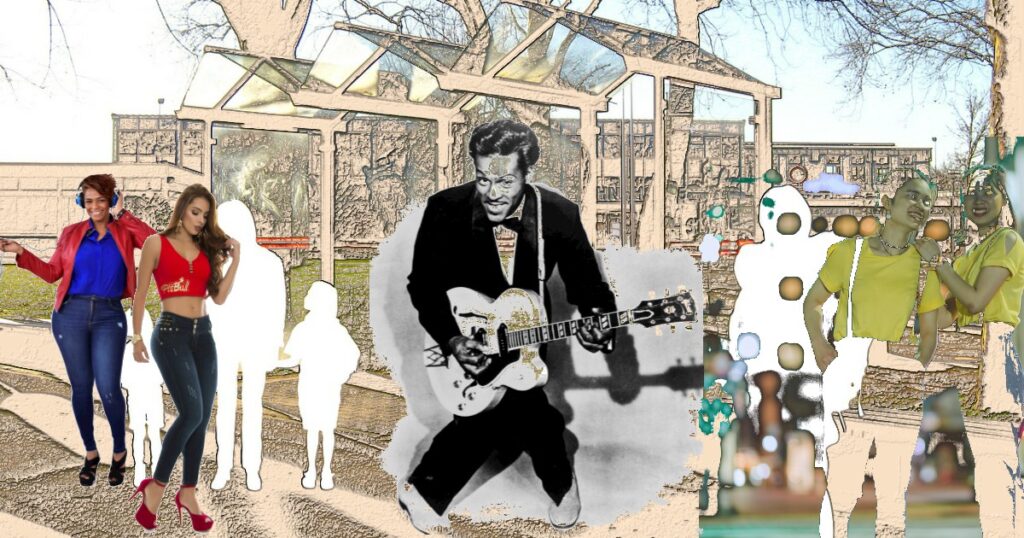
Deejay’s disorderly conduct included belting out tunes at the bus stop, where he regaled the pretty young things with a chorus of, I’m a Girl Watcher. If you happened to be in his audience, back in the day, you’d laugh out loud at his joyful noise. Unfortunately for Deejay, his favorite gig was the busiest intersection in New Rochelle. The location was surrounded by imposing banks and upscale department stores. A patrolman was posted at the intersection to ensure that traffic and behavior patterns did not disrupt local commerce.
Usually, it wasn’t the cops or pedestrians who took issue with Deejay, but the store owners. Emboldened by alcohol, he would lift unsupervised merchandise, anything small enough to hide in the back pockets of his drooping Levi’s. If he started begging for money from passers-by, the police intervened (panhandling was against city ordinance).
“But officer, look at all ‘dem banks! Who gonna miss a little bit a nothin’?”, Deejay would slur, as he was led away for another stint in jail.
Mercy and the Law
At his last arraignment, the District Attorney had grown tired of Deejay’s unmerry-go-round. A black man and a veteran, the D.A. empathized with him, up to a point. Though it was years since the Civil Rights Act had passed, lingering resentments and low boiling points persisted. Out of his own pocket, the D.A. paid for a month of rehab in lieu of jail time for Deejay. It was a last attempt to restore a semblance of self-respect to a beaten man. But the trauma of war and the indignity of hopelessness were too deeply imbedded in Deejay’s soul.
Sadly, the murder of a homeless man, who lived in the shadows, was never solved nor fully investigated. There were no clues to be found amid the detritus of Deejay’s life and death, especially in so public a place as Hudson Park. And the homeless fiercely guarded their secrets – the only possession of value left to them. Although Donald Johnson’s spirit hadn’t survived the violence of war, it took a while before the tender mercies of a callous world stole what was left of him. A year after his senseless death, a plaque mysteriously appeared on the bench at his favorite bus stop. It read: In memory of Deejay whose greatest joy was watching the girls go by. Strolling by, cops on the beat and local shoppers secretly smiled, humming to themselves – music speaks where words fail.
